Case study · Lovable SheBuilds, Season 4

Cheer

A support network, not a social network.

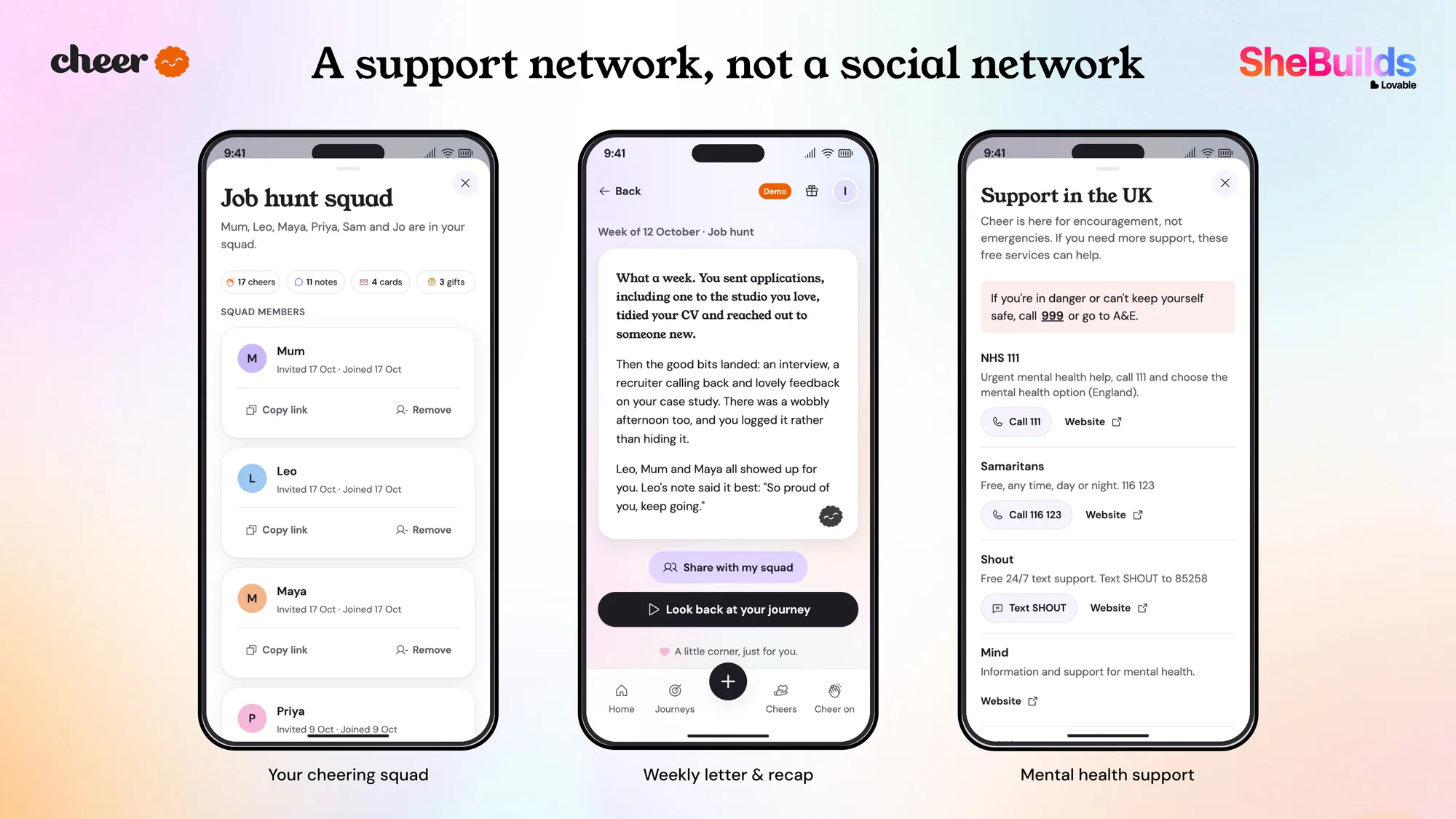
A private space where a tiny squad of people you trust cheers on your effort, not just your results. Log the small stuff, and let your people show up with a tap, a note or a little card.

Role
Solo: research, product, UX, UI, brand, build
Context
Lovable SheBuilds hackathon, October 2026
Platform
Mobile-first web app prototype
Tools
Lovable, Claude, Figma, Google Forms
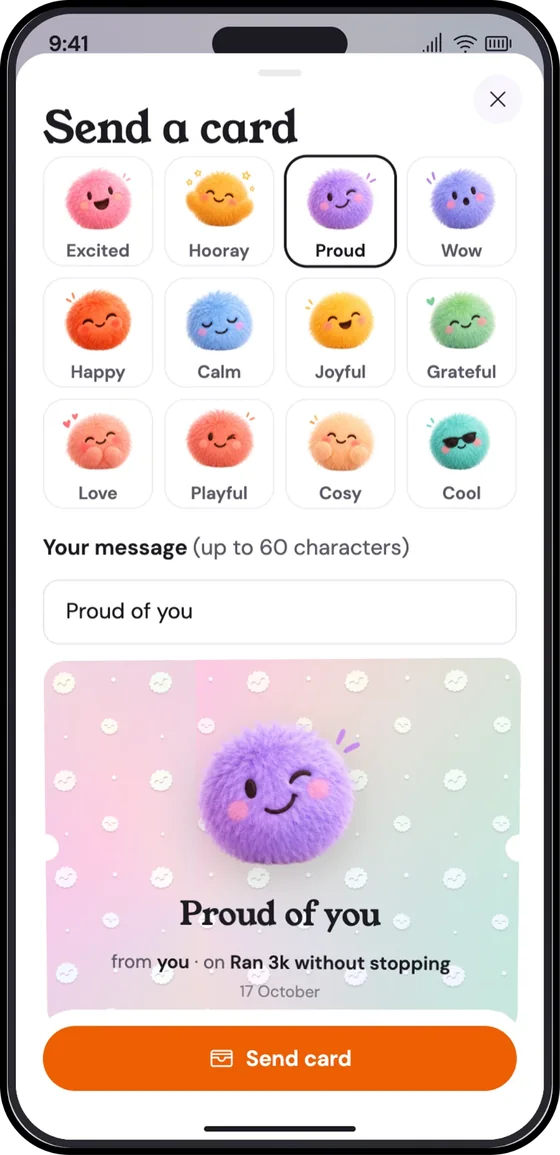
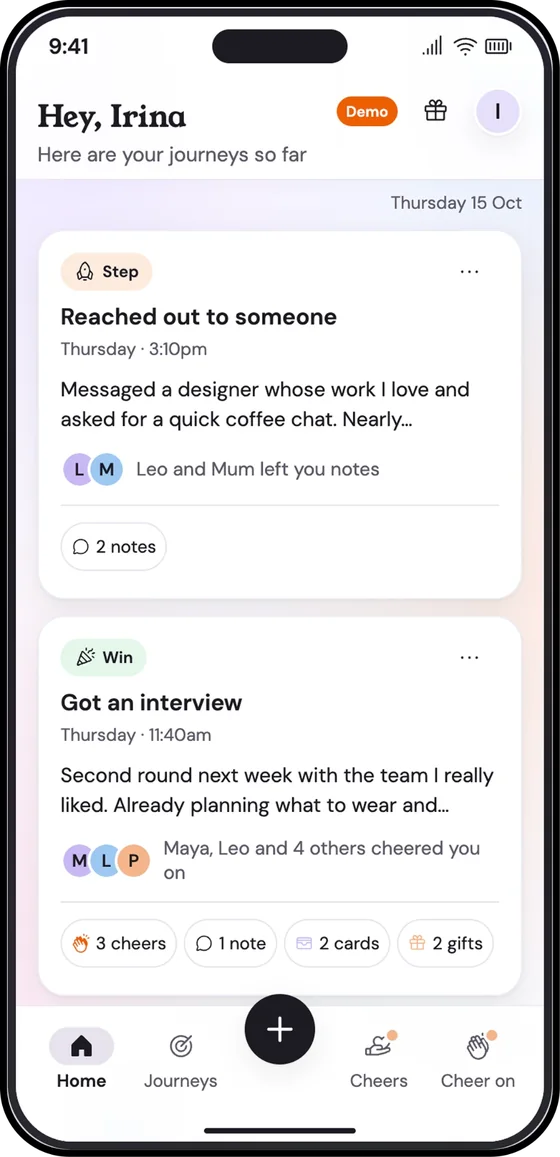
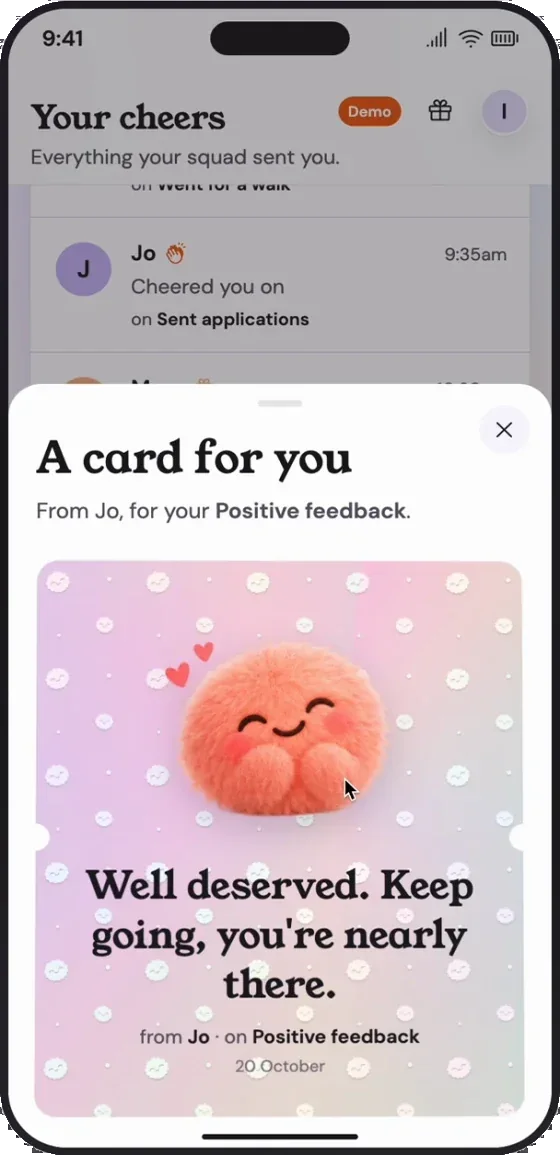
Sending a card in Cheer: choosing a mood, writing a short message, and the card that gets sent Home screen listing your journeys, each moment showing the cheers and notes it collected

01The problem

The small wins nobody sees

Fifteen job applications a week. A run on a grey morning. Getting through a hard day. None of it makes it onto social media, because it doesn't look like a win yet.

Before building anything, I ran a survey, “Cheer: the small wins nobody sees”, with friends, family and the SheBuilds community. Of the 25 people who answered, 23 were working towards something hard themselves, mostly job hunting and getting fit. The effort was huge, and almost entirely invisible.

“It made me feel proud of myself, which I didn't before.”Survey respondent, on someone noticing their effort

15 of 23

people keep their small wins to themselves, or tell just one person. Only 3 post publicly.

It feels like bragging10
I'd feel exposed if it fails10
I don't want to bother anyone9
They wouldn't get it7

Bars show people out of 23. Respondents could pick more than one reason.

Supporters struggle too

10 of 17

supporters aren't always sure when to check in, or what to say. They mostly find out how someone is doing by asking.

Effort lives in silos

Progress is tracked in apps our friends and family aren't on.

Running appLinkedInJournalTherapy app
Nobody
sees it
MumBest friendPartner

02From research to principles

Why not just a WhatsApp group?

The doubters asked the most useful question. A group message is an announcement, it stays visible to everyone, and it buzzes everyone's phone. That makes all three blockers worse, so Cheer had to remove them.

What people told meSo Cheer…
“Sharing feels like bragging.”Treats posting as logging, a private record first, with a “Just for me” option.
“I'd feel exposed if it doesn't work out.”Celebrates effort, not outcomes. Wins, steps and hard days all count.
“I don't want to bother anyone.”Keeps it to a tiny squad, and every cheer says “No need to reply”.
“Would my friends use yet another app?”Lets supporters cheer from a simple link, with no account needed.
“Accountability can become pressure.”Keeps numbers soft: no streaks, no leaderboards, no like counts.
Gifting barriers were soft: cost, timing, “too much”.Keeps gifts light and for milestones. Words are the core of support.

03The product

Log the small stuff. Let your squad show up.

The screens below come from the live prototype, using a demo world with sample friends.

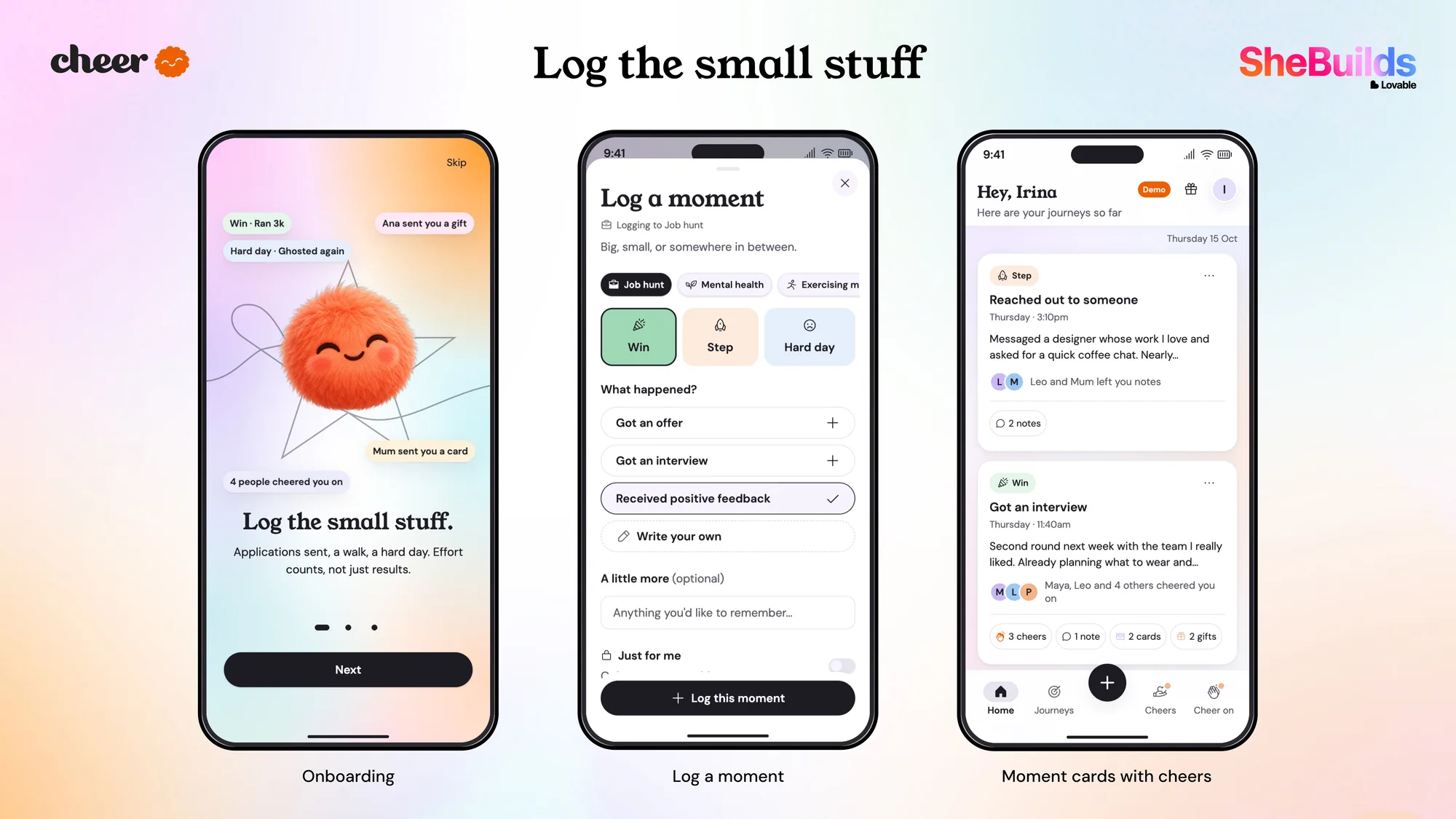
Log

Big, small, or somewhere in between

    04Key design decisions

    Three choices that shaped Cheer

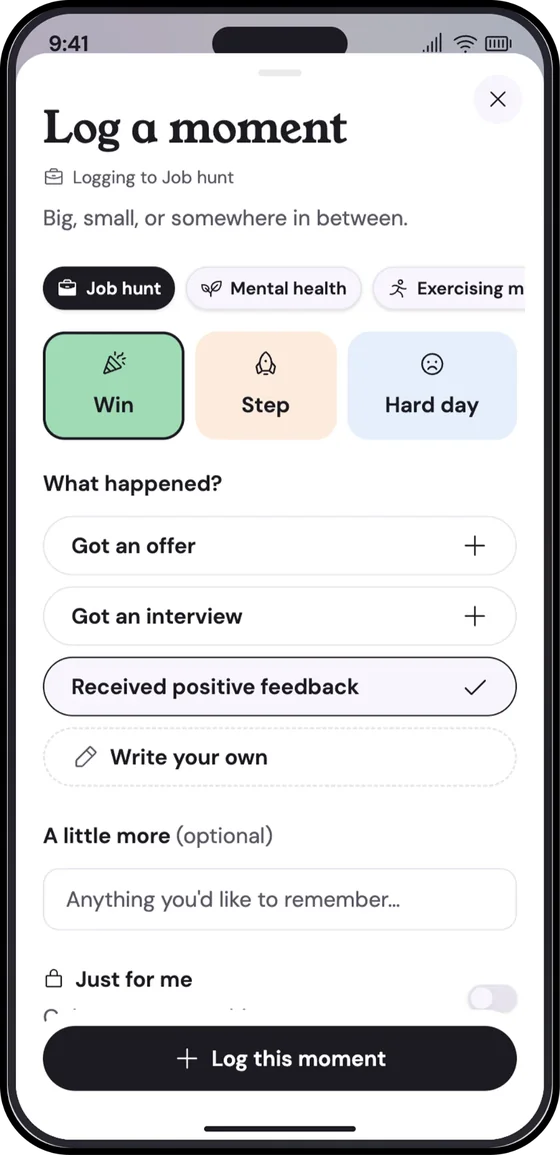
    Log a moment sheet with Win, Step and Hard day, and a Just for me toggle

    Logging, not announcing

    Challenge
    People hold back because sharing feels like bragging, and they'd feel exposed if it failed.
    Decision
    “Post” became “Log”. Every moment is a Win, a Step or a Hard day, with quick prompts to make it effortless, and a “Just for me” switch keeps it private.
    Rationale
    Effort can't fail. “12 applications” is always true; “I got the job” might not be. A private record first lets cautious people start alone and share later.
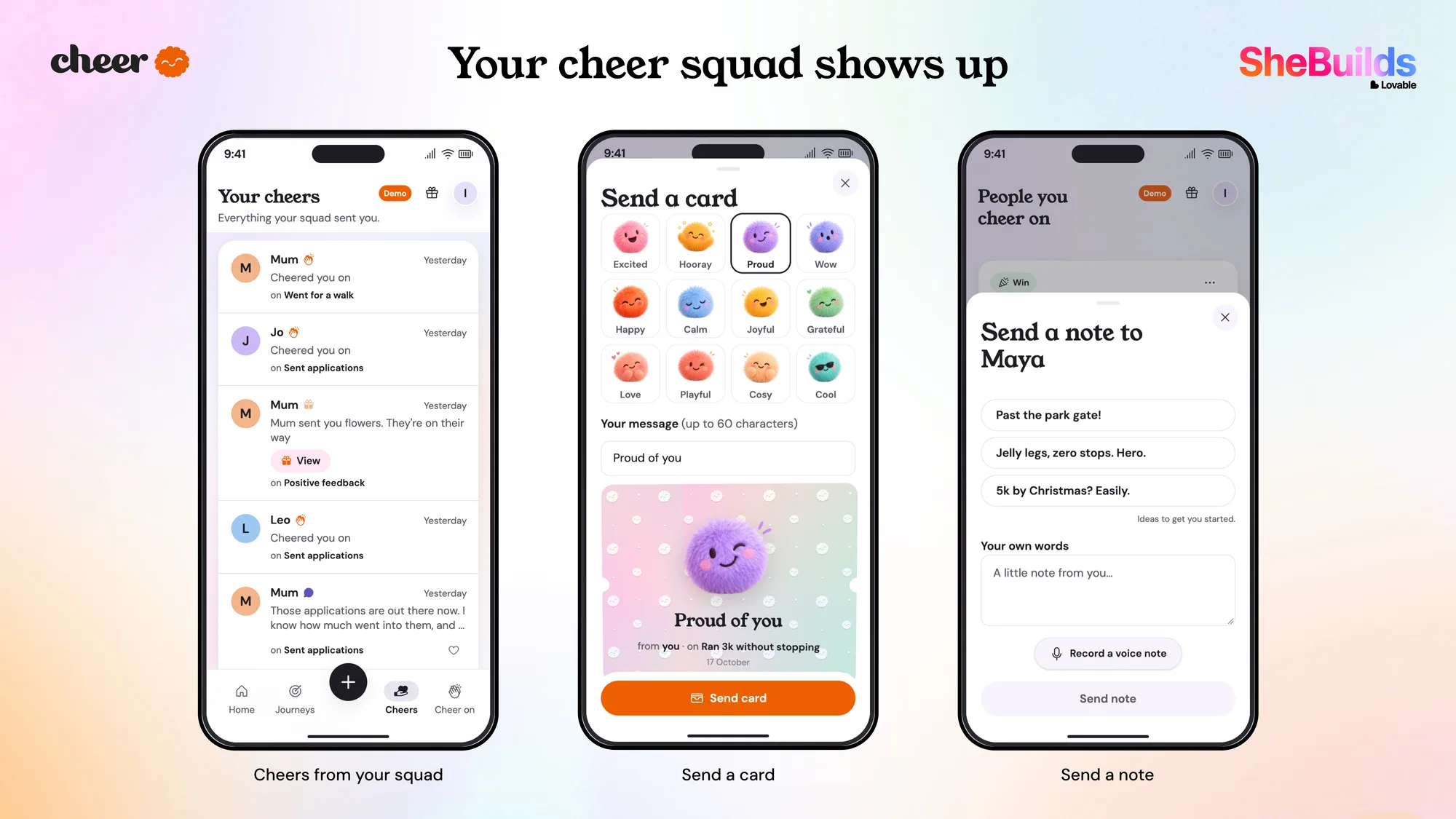
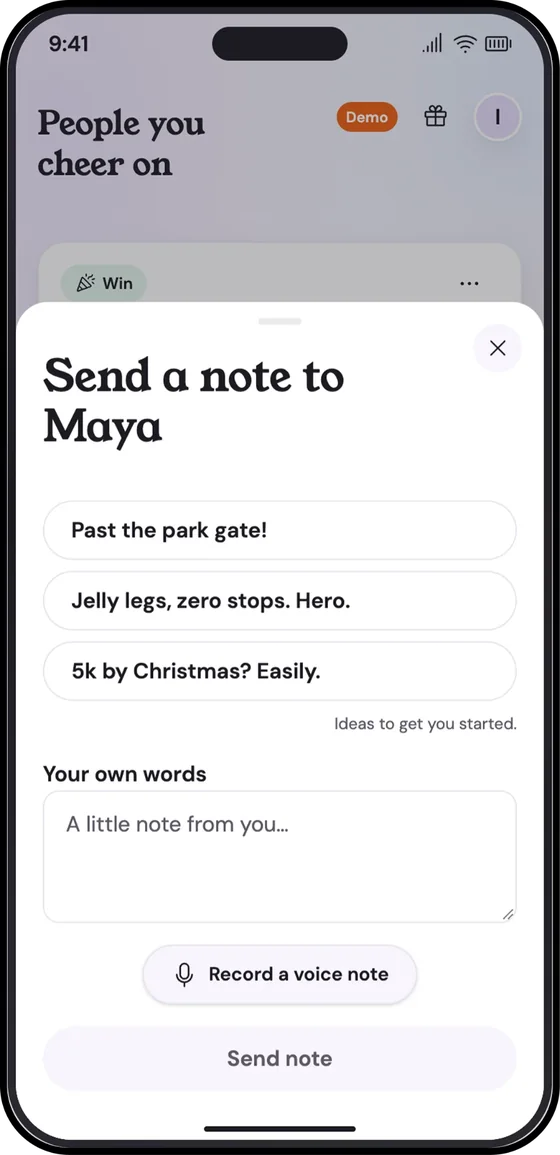
    Send a note sheet with suggested messages

    Make supporting easy, and pressure-free

    Challenge
    Supporters want to help but don't know when to check in or what to say, and nobody wants another app.
    Decision
    Friends cheer from a private link with no account. Notes come with suggestions to get started, cards offer a cast of feelings, and every cheer carries “No need to reply”.
    Rationale
    One respondent described the best support as a message that doesn't need a reply. A cheer should be a gesture, not a conversation.
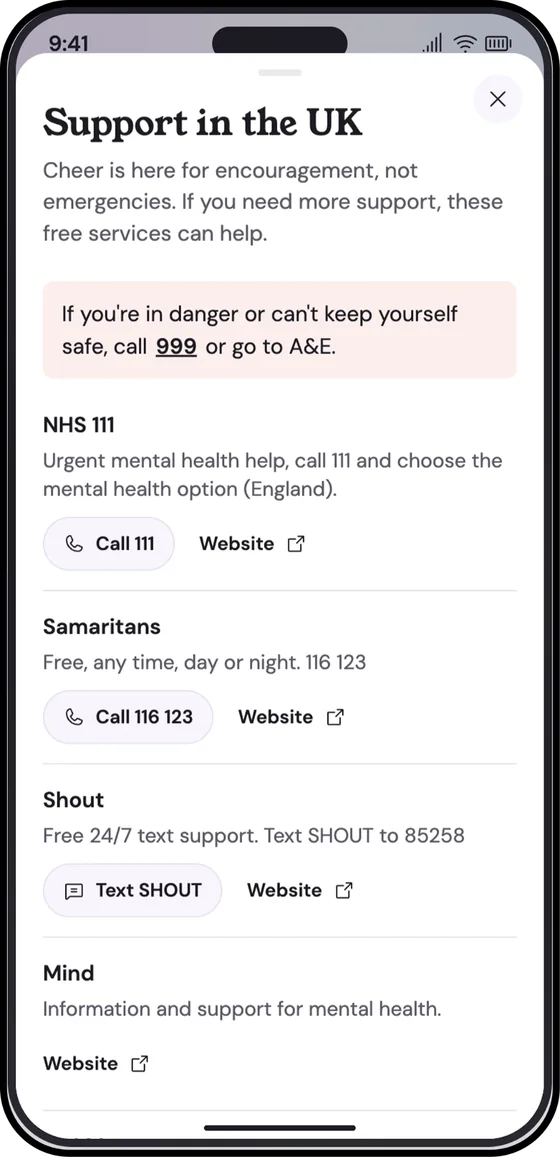
    Support in the UK: NHS 111, Samaritans, Shout and Mind, with an emergency note at the top

    Safe by design

    Challenge
    People only share hard days when it feels safe, and some days need more than a friend.
    Decision
    Private squads, private moments never shown, and an AI kindness check on every message before it sends. Free UK services for mental health, fitness and job hunting sit one tap away.
    Rationale
    Cheer is for encouragement, not emergencies. Being clear about that, and pointing to real help, is part of caring for the person.

    05Testing and iteration

    Real friends find what tests miss

    I shared Cheer with friends while building, and their real use drove the most important fixes. Some of the best changes were removals.

    Fixed

    A card that never arrived

    Observation
    A friend sent me a card. It never reached my inbox.
    Implication
    The supporter flow could show success without saving, quietly breaking trust.
    Response
    Success now shows only after the save is confirmed, with a clear message if it fails.
    Fixed

    An invite link that broke at midnight

    Observation
    A friend opened his link and saw “This update isn't available”.
    Implication
    The page only showed same-day updates, so valid links looked broken after midnight.
    Response
    Links now show the last 7 days, with a friendly empty state when there's nothing new.
    Changed

    Less noise, better contrast

    Observation
    Orange “New” pills and badges competed with the content, and white on orange failed contrast.
    Implication
    Extra signals added friction instead of helping people notice new support.
    Response
    Removed the pills, kept one soft “New” badge on unseen cards, and fixed its contrast.
    25survey responses
    16 of 25said “Love it” or “Interesting”
    63visits in the first weekend
    8countries

    The survey sample is small and mostly people close to me, so I treat it as directional; the critical answers were the most useful. Visit numbers come from site analytics for 17 to 18 October 2026 and include my own testing.

    06Challenges and learnings

    What I'd tell myself on day one

    Research changes the product

    The survey turned “post” into “log”, added “Just for me”, and moved gifting from hook to nice-to-have.

    Real use beats more features

    One lost card taught me more than any feature I added. Trust is built in the boring states: saving, empty, and error.

    Removing is designing

    Several of my favourite changes took things out. A support app should feel calm, so every signal has to earn its place.

    Limitations

    • Cheer is a prototype built as a web app, not yet a native mobile app.
    • Gifting and voice notes are simulated, to test interest before building them.
    • There are no push notifications or weekly round-ups delivered to supporters yet.
    • Support resources are UK-only.

    07What's next

    Where Cheer goes from here

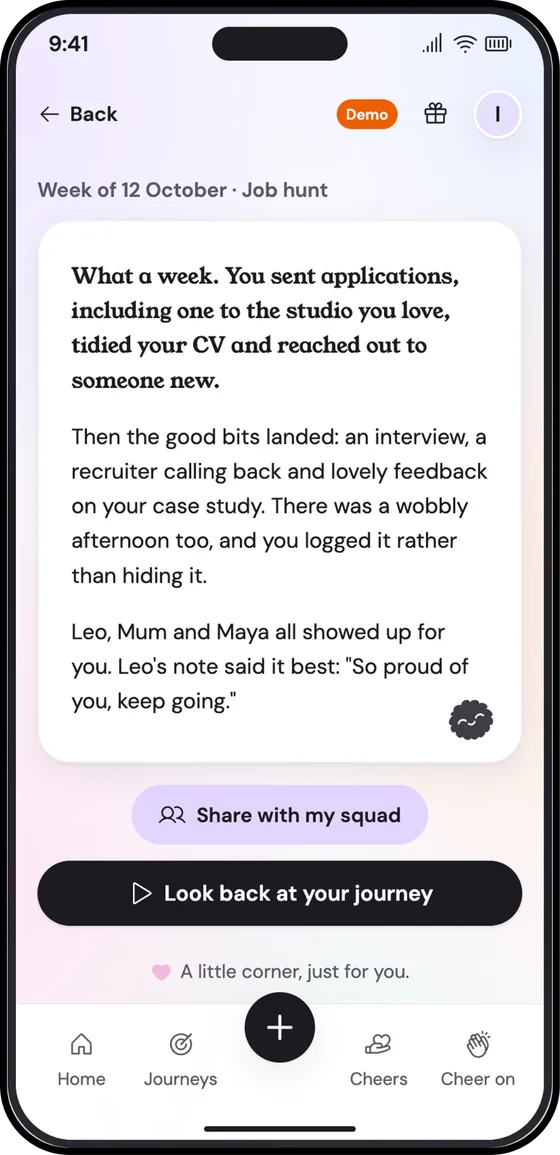
    The research points clearly to the next step: a gentle weekly round-up so supporters get the timing and context they're missing, delivered through WhatsApp or email so they never need another app. After that, native iOS and Android apps with notifications that nudge, never nag. None of this is built yet.

    A card for you: Well deserved. Keep going, you're nearly there.Weekly letter recapping the week